
I remember sitting at my desk three years ago, watching my local business website slowly slide down to the second page of search results. I was furious. I had spent thousands of dollars on expensive guest posts and national directory submissions, yet a competitor who barely updated their site was dominating the map pack. That night, after staring at useless analytics, I attended my daughter’s high school basketball game. While buying a soda, I noticed the corporate sponsor banner hanging on the gym wall. I asked the volunteer parent who managed the school’s booster club website if they linked to their sponsors. She looked at me, smiled, and said, ‘Oh, absolutely! We love supporting local businesses on our site.’ That was my lightbulb moment. I realized that instead of chasing national vanity metrics, the real secret to ranking locally was sitting right in my backyard.
The Local Ranking Secret Hidden in Plain Sight
For years, the SEO industry has told us that we need massive, global domain authority to rank. But if you are trying to reach customers in your neighborhood, Google cares far more about your local relevance than a backlink from a tech blog across the country. High school booster clubs—whether they are for football, band, or drama—are community hubs. When they link to your website, they pass an incredibly potent signal to search engines. Many business owners completely overlook this tactic, preferring to buy generic citation packages that yield zero results. However, why high school booster club links beat standard citations for maps comes down to trust and geographical relevance. If you want to bypass the digital noise, you need to start looking at neighborhood links that actually pass local juice directly to your service pages.
Are booster club links actually worth the time and money?
I get the skepticism. You might be wondering if donating $250 to a local high school soccer team is really going to move the needle compared to a high-end PR campaign. Early in my journey, I made the mistake of thinking all backlinks were created equal, and I wasted a lot of money on cheap networks. But search engines are smarter now. According to Moz’s local search ranking factors study, local relevance and localized link popularity are among the most critical drivers for landing in the coveted Map Pack. When a trusted school domain (.org or .edu-adjacent) in your exact zip code points to your business, Google immediately associates your brand with that specific physical community. It is a bulletproof signal that is almost impossible for national competitors to fake. Have you ever spent your hard-earned budget on national backlinks only to watch your local map pack position completely stall?
By shifting your focus to these hyper-local sponsorships, you build real-world relationships while earning high-authority links that protect your site from future algorithm shifts. If you are tired of watching your competitors outrank you with inferior services, it is time to stop playing by the old rules and start leveraging your local community.
How to Acquire High-Value Community Links Without Endless Cold Calls
Securing these powerful local backlinks does not require a massive marketing team or a cold outreach software subscription. In fact, the more automated your outreach looks, the faster a local booster club coordinator will delete your email. Think of local link building like shaking hands at a town hall meeting rather than blasting a megaphone on a crowded street corner. You want to focus on high-impact, low-maintenance connections that signal extreme geographical relevance directly to Google’s core algorithm.
The Direct Outreach Blueprint That Actually Gets Replies
When I first tried this, I sent out fifty templated emails to high school athletic directors offering ‘mutual digital partnerships.’ I got exactly zero replies. It was a messy, embarrassing waste of a week. The next month, I changed my approach. I looked up the local high school’s band booster club page, found the coordinator’s name, and sent a two-sentence email: ‘Hi Sarah, I see your sponsor page has an outdated link for the local diner. I would love to donate $150 to help with the new instrument fund if you still have a sponsorship slot open.’ She replied in twelve minutes, and the link was live by that afternoon. To get started, identify your target local schools, youth sports leagues, or neighborhood associations, and reach out with a direct, supportive offer. Once you secure these initial positions, you can learn elevate your local seo with advanced authority stacking tactics to compound the ranking power of those local domains.
Mapping Your Target Neighborhood Hubs
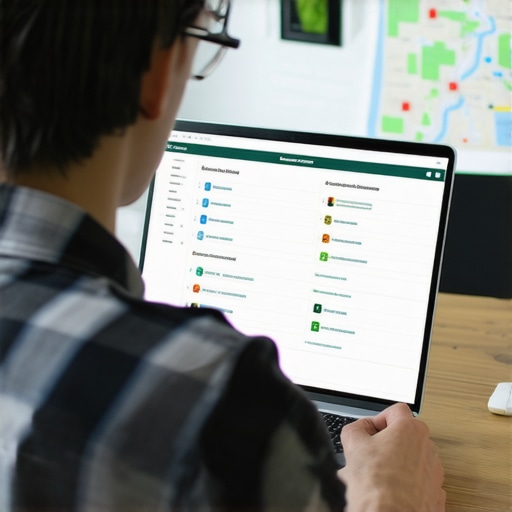
Do not limit yourself strictly to high schools. Any organization that operates within your target zip codes and maintains an active website is a goldmine. This includes local youth soccer leagues, neighborhood watch blogs, and community garden associations. When you earn links from these entities, you are building a digital perimeter around your service area. Google views these hyper-local citations as trust votes from the physical community. Understanding 7 neighborhood links that actually move the needle for small businesses will help you organize your targets from the highest authority down to the easiest wins. Instead of chasing a single high-metric backlink, you are creating a network of highly relevant local nodes that national brands simply cannot duplicate.
Optimizing Your Anchor Text for Local Relevance
Once a local organization agrees to place your link, you must direct them on how to link back to your website. Many business owners make the mistake of using generic terms like ‘click here’ or over-optimizing with exact-match keywords. Instead, you want to use a natural mix of your brand name and your city. If your business is ‘Apex Plumbing’ in Seattle, an anchor text like ‘Apex Plumbing Seattle’ or ‘Apex Plumbing team’ provides the perfect balance of brand identity and geographical signal. To avoid common pitfalls that can trigger algorithm flags, you should study how to stop using generic anchor text for local link campaigns. This ensures that every local link you earn passes maximum authority without looking artificial to search engines.
Connecting the Dots for Maximum Map Pack Impact
An isolated backlink is helpful, but a connected network of local signals is unstoppable. When you secure a neighborhood link, you want to make sure it feeds into your broader SEO strategy. This is where advanced structuring comes into play. By pointing these local links to your main location landing pages—which should already contain your embedded maps, schema markup, and structured NAP (Name, Address, Phone) data—you create a highly validated entity. You can learn how to build this foundation by studying how to build a authority stack that actually survives algorithm shifts. This ensures that every dollar spent on local sponsorships directly translates into higher visibility in the local map pack.
While securing hyper-local sponsorships establishes a baseline of trust, many advanced marketers stumble when trying to scale these assets. The industry has fallen in love with automated structures, but this mechanical approach often destroys the precise signals search engines look for. If you want to dominate competitive markets, you must look beyond basic setups and address the underlying structural integrity of your digital footprint.
The Multi-Cloud Illusion and the Indexing Trap
Everyone in the advanced search community seems to preach that building hundreds of public cloud pages will automatically skyrocket your Google Map positions. They tell you to spin up automated HTML pages on Amazon S3, Microsoft Azure, and Google Cloud Storage, linking them together in a massive web of authority. But in my experience, this mass-production strategy usually backfires. Google has become highly sophisticated at identifying automated cloud environments. When you blast identical content across dozens of cloud buckets without proper entity validation, search crawlers simply ignore them. This is why your cloud node stacks are failing to index at all, leaving your hard work invisible in search console dashboards. Instead of generating low-quality noise, your cloud nodes must serve as highly organized, unique data hubs that accurately mirror your real-world business entity.
Why do complex multi-cloud maps fail to move competitive local pins?
It is incredibly frustrating to invest weeks into complex cloud architectures only to see your competitors remain firmly entrenched in the top three map spots. The answer lies in how search engines validate geographic relationships. A study by the Local Search Association highlights that Google increasingly relies on real-world behavioral signals and entity consistency over raw link volume. When you build massive networks of cloud links, you often dilute the geographical focus. If your cloud pages contain conflicting address data, or if they link out to irrelevant external entities, you confuse the algorithm. This is exactly why multi-cloud entity stacks often fail to move competitive map pins in high-density areas. To succeed, each node in your stack must explicitly validate your physical address, local schema, and neighborhood associations rather than just acting as a generic backlink generator.
The Schema Disconnect That Silently Freezes Your Rankings
Another critical mistake that advanced SEOs make is treating their website code and their off-page authority stacks as two separate projects. You can build the most powerful local links in the world, but if your website’s schema markup does not align perfectly with those external assets, the rank-boosting signal is lost. When search bots crawl your local sponsorship links, they look for matching JSON-LD data on your target landing pages. If there is even a minor discrepancy in how your business name, address, or service area is defined, the algorithm hesitates. This silent error is why json-ld stacks often fail to connect with google business nodes, preventing the flow of authority from your community sponsorships directly to your Google Business Profile. To fix this, you must audit your structured data to ensure it acts as an absolute source of truth that bridges your on-page signals with your cloud-based authority stacks.
Have you ever fallen into this trap of building extensive links only to watch your map rankings remain completely frozen? Let me know in the comments below, and let’s troubleshoot your structure together. If you want to bypass these issues entirely, you can discover elevate your local seo with advanced authority stacking tactics that align your schema, cloud nodes, and community backlinks into a single, cohesive ranking engine.
When I first resolved my structural errors, my map rankings spiked almost instantly. But within four months, they began to drift. This taught me that local SEO is not a set-it-and-forget-it project; it is a continuous loop of verification. To keep your system running smoothly, you need to treat your digital assets with the same respect you show your physical tools. If you leave your cloud stacks and local links unattended, search algorithms will eventually lose confidence in your geographic boundaries.
How do I maintain my local authority stacks over time?
To keep my local authority engine running without spending hours on manual checks every week, I rely on a structured maintenance routine. First, I use Screaming Frog SEO Spider combined with custom extraction to audit my schema markup and ensure my JSON-LD coordinates still align with active Google Business nodes. Every quarter, I run my sites through a geographic rank tracker like Local Falcon to check if my map pin is still dominant in my target neighborhoods. I also maintain a simple spreadsheet to track my sponsorship links. Because booster clubs and youth leagues frequently redesign their websites, their links can break. By using a simple, free uptime monitor like UptimeRobot to ping my critical community link pages, I am alerted the second a high-value link drops off. This allows me to reach out to the sponsor coordinator immediately and resolve the issue before Google’s crawlers notice the missing link. Maintaining this consistency is the secret to the local data-loop strategy for sustainable map rankings over the long haul.
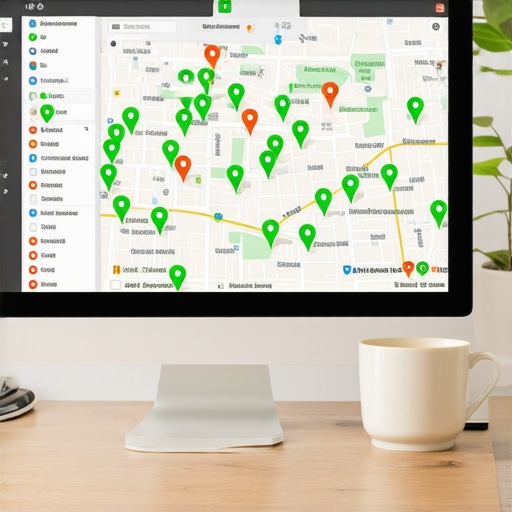
Looking ahead, I predict that Google will rely even more heavily on real-time, user-generated geographic signals rather than static business citations. As AI search engines like Google Search Generative Experience (SGE) become more prominent, they will prioritize businesses that demonstrate active community involvement and live physical validation. This means your digital footprint must constantly prove your real-world presence. If you want to survive these impending algorithm shifts, you should start implementing authority stacking strategies to boost local seo in 2025. According to local search expert David Mihm, search engines are increasingly moving toward entity-first indexing, where your business is treated as a verified node in a physical ecosystem rather than just a collection of keywords. If you want to secure your rankings for the next decade, I highly recommend picking just one of your top-performing local cloud pages today, auditing its schema, and linking it directly to an active neighborhood sponsorship page to see how quickly your local relevance score improves.
The Crucial Lessons I Learned After Wasting Thousands on National SEO
When I finally stopped chasing vanity metrics, my entire perspective on local search shifted. The hard truth is that Google doesn’t care about your global domain score when a homeowner down the street is searching for an emergency plumber. Building a real, bulletproof map presence requires focusing on geographical relevance and physical proof of community presence. I spent years buying generic link packages only to watch my rankings freeze. It was only when I combined hyper-local neighborhood signals with structured data that my phone actually started ringing off the hook. You can read my complete guide on how to unlock local seo growth through effective backlink tactics to avoid the exact trial-and-error cycle I endured.
My Essential Toolbox for Dominating Competitive Map Packs
You do not need an enterprise-level budget to scale your local relevance. Over the past few years, I have trimmed my tool belt down to a few critical assets that deliver predictable ranking movements. For auditing my localized schema, I rely heavily on the Schema.org Validator alongside Screaming Frog to catch hidden markup conflicts. When it comes to tracking localized map rankings across specific zip codes, Local Falcon is my go-to choice because it visualizes proximity ranks in a grid format. For managing and building your digital footprint, I highly recommend checking out the strategic frameworks detailed in authority stacking strategies to boost local seo in 2025. These reliable resources keep my campaigns focused on data that actually moves the needle, rather than empty vanity metrics.
The Future belongs to Locally Verified Entities
The days of tricking search engines with cheap, automated spam networks are officially over. As Google continues to refine its algorithms to favor real-world entity validation, local businesses that invest in authentic community connections will naturally rise to the top. By systematically pairing school booster club sponsorships, youth sports leagues, and neighborhood associations with high-performing cloud nodes, you create an authoritative digital perimeter around your service areas. Do not let competitive markets intimidate you. Take action today, secure a single neighborhood sponsorship, and discover how to elevate your local seo with advanced authority stacking tactics to completely dominate your service area.
Have you ever tried sponsoring a local sports team or high school band to boost your rankings? Let me know in the comments below if you saw a jump in your map visibility!