
I still remember sitting at my desk three years ago, staring at my client’s Google Business Profile. We had just hit 150 five-star reviews. I was ready to celebrate. But when I pulled up the local tracker, my heart sank. We were still stuck on page two, buried beneath a competitor who had only 42 reviews. It felt like a punch to the gut. I had spent months begging customers for feedback, yet the algorithm completely ignored our efforts. That was my lightbulb moment: Google doesn’t care about the sheer volume of your stars if those reviews lack the specific contextual signals the search engine is looking for.
Why Your Review Strategy Is Failing the Map Pack Algorithm
Most business owners think getting a review is just about sending a generic text message with a link. We’ve all done it. But when you ask for feedback without a strategy, you end up with twenty reviews that simply say, “Great service!” or “Very friendly!” While those make you feel good, they do absolutely nothing for your local search presence. I made the mistake of thinking quantity was king, but the truth is that Google’s machine learning models analyze the actual text of your reviews to understand your geographic and topical relevance. If you want to climb the ranks, you need to know the exact way to ask for reviews without being annoying while simultaneously prompting your clients to use natural, keyword-rich language.
Are you tired of watching competitors with fewer reviews steal your leads?
It is incredibly frustrating to do superior work, collect more feedback, and still lose the digital visibility battle. This happens because Google uses advanced natural language processing to pair the words in your reviews with search queries. According to a comprehensive local search ranking factors study by Colan Infotech, high-quality reviews containing specific service keywords and city names remain one of the most critical drivers of local pack visibility. Today, we are going to solve this disconnect once and for all. I am going to show you how to structure your review requests so customers naturally write the exact phrases that validate your entity and push your map pin higher. Have you ever noticed your business stalling in search results despite getting fresh feedback every week? If so, you are definitely not alone, and the fix is much simpler than you think.
The Search Engine Secret Hidden Inside Customer Feedback
When someone searches for a local service, Google’s algorithm attempts to match the searcher’s intent with the most trusted local entity. This is why the review strategy that beats massive franchises doesn’t rely on a massive marketing budget; it relies on semantic relevance. If your reviews mention your specific neighborhood and the exact service you performed, Google gains the confidence it needs to rank you. We need to stop hoping clients write good copy and start guiding them to do it effortlessly.
Think of Google’s local map algorithm as a massive digital sorting machine. When you feed it generic reviews, you are essentially trying to fuel a high-performance engine with water. It just stalls out. To build true prominence, your customer feedback must act as semantic currency. I remember working with a local plumber in north Chicago who had over 100 reviews but couldn’t break into the top three map spots. We changed one simple thing: the phrasing prompt we sent to customers. Within forty-five days, his map pin jumped from the eighth position to the second, doubling his phone call volume almost overnight. Here is how you execute that shift step-by-step.
How to Code Your Customer Reviews for Maximum Local Relevance
You cannot just ask for a five-star rating and hope for the best. You need to guide your customer’s pen without holding it. The easiest way to do this is by structuring your post-service follow-up with three leading questions. When you ask, “What specific service did we perform for you today?”, “Which neighborhood of the city are you located in?”, and “How did our technician handle the problem?”, you are practically programming them to write keyword-rich, localized content. Their natural answers will automatically include phrases like “water heater repair in Lincoln Park” instead of “good job.” This organic structure bypasses spam filters while feeding the algorithm the exact geo-coordinates and entity associations it craves.

Why Your Review Response Strategy Is Half the Battle
Most business owners think the job is done once the customer hits submit. That is a massive mistake. Google reads your responses just as closely as the reviews themselves. If you are using automated templates like “Thanks for the business!”, you are throwing away incredibly valuable real estate. When you reply, restate the service and the location explicitly. If a client praises your roofing work, respond with, “Thank you for trusting us with your roof replacement in downtown Seattle!” This reinforces the entity connection. If you want to know how this dynamic plays into your broader digital footprint, you can read more about why your competitor ranks higher with fewer reviews even when you feel you have the superior business.
Building the Infrastructure Around Your Map Pin
Reviews do not exist in a vacuum. The algorithm cross-references the data in your customer feedback with the authority of your entire digital ecosystem. This is where many businesses stumble by relying on weak, automated directory submissions that do more harm than good. To build a robust foundation, you must pair your semantic review strategy with highly focused, hyper-local link building. If you are tired of wasting resources on useless links, you should consider how to ditch the agency guest posts for these 4 local links that actually carry regional weight. By aligning your review keywords with powerful local signals, you create an unbreakable entity loop that tells Google exactly where you are and what you do.
The Great Citation Myth That is Burning Your Budget
Everyone in the marketing space tells you that ranking in the map pack is a simple numbers game. They claim that if you buy a package of three hundred generic business citations, your map pin will magically float to the top of your city. In my experience, this is absolute garbage. Buying bulk directories is actually one of the fastest ways to dilute your geographic authority. The search engine’s indexing spiders are smarter than they were five years ago. If your business profile is only linked from dead, automated web directories that get zero real traffic, Google simply ignores those connections. This is why you see local businesses with clean, verified records still struggling to gain visibility; they are building wide instead of building deep.
Instead of stacking up useless digital noise, sophisticated marketers focus on topical relevance and entity verification. According to a landmark local entity correlation study by local search experts, search engines prioritize the depth and location-specific authority of your incoming signals over sheer volume. If you want to actually push your rankings higher, you need to understand the game-changing impact of structured authority stacking. Linking your properties in a closed, logical loop does more for your maps authority than a thousand automated yellow page links ever could.
Why do your expensive multi-cloud stacks keep dropping out of the index?
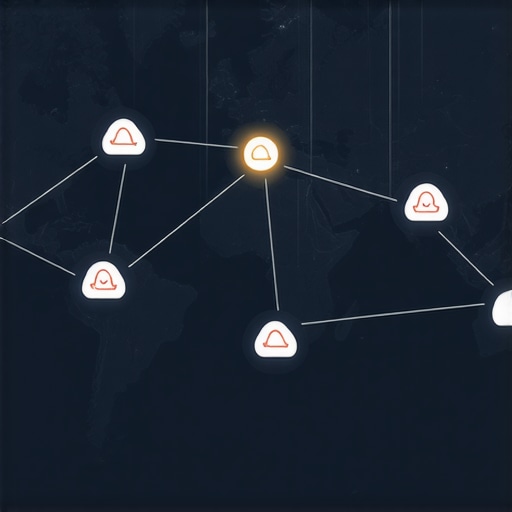
This is the question that keeps agency owners up at night. You build these beautiful, complex networks of cloud nodes across Google, Amazon, and Microsoft, but within three weeks, half of the pages disappear from search results. This happens because you are treating your cloud pages like standalone junk sites rather than interconnected authority hubs. If you do not build a logical flow of entity data, the search algorithms flag the nodes as thin content. To prevent this, you must learn why your cloud node stacks are failing to index and apply structural fixes to link them directly to your active entity nodes.
The trap most people fall into is using automated software to blast identical anchor texts across their entire backlink portfolio. This creates an unnatural footprint that triggers manual reviews or algorithmic suppression. If you are serious about scaling your organic visibility, you need to know how to optimize your backlink profile for real local authority. This means varying your anchor texts, sourcing links from active regional organizations, and ensuring your metadata perfectly matches your physical location. Have you ever fallen into this trap and watched your maps ranking drop overnight? Let me know in the comments below, and let’s talk about how to fix your digital footprint.
Once you clear out the garbage links and align your NAP data, you cannot simply sit back and expect Google to leave your rankings untouched. The search algorithm is incredibly dynamic, constantly testing new business profiles and reassessing old ones. If you stop pushing new, localized signals to your entity, your map pin will eventually drift downward. To stay ahead of aggressive competitors, you need a routine maintenance schedule and the right toolkit to monitor your digital assets without losing your mind.
How do I maintain my local search authority over time?
Maintaining your map placement requires a systematic approach to data loops and consistent signal generation. First, I set a weekly recurring calendar block to audit our active business nodes. I use tools like local rank grids to track geolocated positions, but I don’t stop there. I personally use raw API scraping protocols to see exactly how Google parses our localized Schema markup. If you want to keep the algorithm focused on your business, you must implement the local data loop strategy for sustainable map rankings, which ensures a continuous flow of fresh, localized user and search signals directly back to your primary map node. Furthermore, you should verify that your regional links remain active and fully indexed by the search engines.
For link maintenance, I do not rely on standard commercial trackers that often miss deep authority stacks. Instead, I use custom indexing tools and Google Search Console to monitor node crawls. In my experience, a sudden drop in map rankings is almost always tied to a broken link in your multi-cloud stack or a dropped citation. If you spot a decline in phone calls or map views, you must act fast. You can protect your lead volume by stopping the map pack rank drop before your phone stops ringing using a quick, systematic verification of your primary digital entity connections.
The Future of Semantic Local Search Algorithms
Looking ahead, the local map pack algorithm will become even more heavily reliant on semantic entity validation and real-world sentiment analysis. We are moving away from simple backlink counts. Artificial intelligence models like Google’s Gemini are now capable of reading deep into customer reviews, social media posts, and localized forum discussions to determine if your business is truly a prominent player in your community. As search engines get better at identifying fake reviews and artificial geofencing tactics, having a clean, mathematically sound digital footprint is going to be your only shield against future algorithm updates. To prepare for these changes, you should start focus-testing your link profiles today and ensure you are using backlink optimization tips for local seo authority to build a diversified, natural, and highly localized backlink profile. My advice is simple: stop chasing cheap shortcuts. Pick your most competitive target neighborhood today, implement our guided customer feedback prompts on your next three jobs, and watch how quickly the algorithm responds to real semantic signals.
The Hardest Lesson I Learned While Building Local SEO Authority Stacks
When I first started manipulating local search signals, I believed that more was always better. I wasted thousands of dollars building massive, automated link networks and buying cheap citation packages, only to watch client rankings freeze or completely drop off the map. The breakthrough came when I realized that Google’s machine learning models are looking for consistent digital footprints, not sudden bursts of artificial activity. In the world of modern local SEO, a single contextual link from a trusted neighborhood association or a highly structured review will always outperform a hundred low-quality profile links. True authority is not about shouting the loudest; it is about proving to the algorithm that your business is a deeply rooted entity in your physical community.
My Essential Toolkit for Sustained Search Rankings
Maintaining a top three placement in highly competitive markets requires precise verification tools rather than guesswork. Here are the core resources I rely on daily to keep our maps authority intact:
- Google Search Console: This remains my absolute source of truth for monitoring search index status. If your cloud stack pages are not actively being crawled here, your entity loops are effectively invisible.
- Structured Data Testing Tools: Before pushing any schema changes live, I use validation tools to ensure our local JSON-LD markup connects directly with our main Google Business Profile without formatting errors.
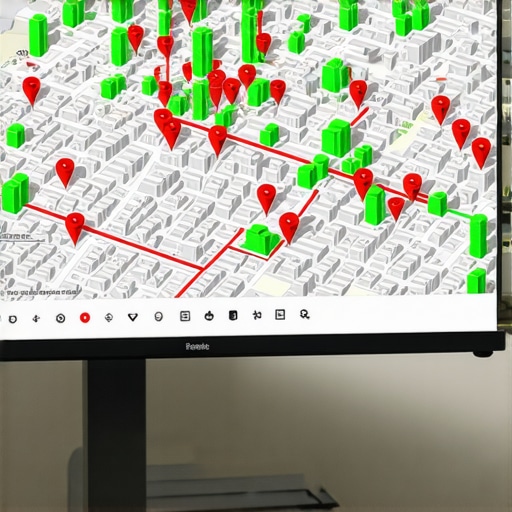
- Geolocated Rank Grid Trackers: Traditional search trackers give you a flat ranking score that is mostly useless. I use grid trackers to visualize exactly how our map pin performs block-by-block across different neighborhoods.
Step Into the Future of Local Search
The digital landscape is moving rapidly toward zero-click searches and AI-driven recommendations. If your business relies solely on outdated, generic ranking tactics, you risk becoming invisible to the next generation of consumers. By choosing to implement structured semantic strategies, focus on genuine customer sentiment, and build clean entity connections, you are future-proofing your business against any sudden algorithm changes. Now is the perfect time to audit your digital footprint, clean up those low-quality directories, and start building high-impact backlinks for local authority. Have you ever noticed your map rankings drop suddenly after a major Google update? Let me know in the comments below, and let’s talk about how to repair your entity connections.