I spent three weeks obsessing over national directories, thinking they were the golden ticket to local dominance. I sat in my home office, coffee gone cold, staring at a map ranking tool that showed my client’s bakery was a ghost in their own neighborhood. We had the big names—Yelp, Yellow Pages, the works—but when someone three blocks away searched for a fresh sourdough, we were nowhere to be found. It was a gut-punch moment. I realized that while I was shouting at the whole world, I wasn’t even whispering to the street corner. That realization changed everything about how I approach local directories to signal hyper-relevance. Today, I am going to show you how to stop wasting time on generic noise and start signaling to Google exactly where your business roots are planted. We are going to bridge the gap between ‘having an address’ and ‘being a neighborhood authority.’
Google Knows Your Address but it Doesn’t Trust Your Location
If you are struggling to move the needle, you aren’t alone. One of my biggest early mistakes was buying a generic citation package from a cut-rate agency, thinking quantity would override context. It didn’t. In fact, why most small businesses fail at local map prominence often comes down to this lack of geographic specificity. Google’s algorithms are increasingly sophisticated; they look for ‘proximity signals’ that prove you are part of the local fabric. According to a study by Backlinko, localized organic rankings are the strongest predictor of local pack rankings, meaning those neighborhood-level mentions are non-negotiable. I discovered that why your neighborhood links carry more weight than national PR is simply because they provide the proximity validation that a Forbes mention never could. Have you ever felt like you’re doing everything right with your SEO but still seeing your competitors down the street outrank you for no apparent reason?
Do these tiny local lists actually move the needle?
It is easy to be skeptical. Why would a mention on a neighborhood watch site or a local ‘best of’ list from a tiny community blog matter more than a high-authority national directory? The answer lies in the ‘Entity’ connection. When you use local directories to push niche relevance, you are giving Google the ‘where’ and the ‘what’ in one single, high-trust package. We are going to move beyond the basics and look at how to find these hidden neighborhood gems that your competitors are completely ignoring.
Stop Hunting Cities and Start Hunting Blocks
To dominate your local area, you need to shift your focus from city-wide keywords to hyper-local landmarks. Think of your business like a newcomer at a neighborhood block party. You don’t walk in and shout your resume at everyone; you find the most respected person there and get a warm introduction. This is exactly what it looks like when you find untapped neighborhood links your competitors missed. You aren’t just looking for directories; you are looking for local ‘nodes’—the neighborhood watch blogs, the community center resource lists, and the local historical society mentions. I once took on a client in a hyper-competitive urban district who was being buried by three massive national franchises. Instead of trying to outspend them on generic backlinks, we focused solely on how to use neighborhood-level signals to outrank franchises. We reached out to a small community garden blog and a local primary school’s sponsorship page. While these sites had low global authority, they had massive proximity trust. Within three weeks, the client’s map pin didn’t just move—it jumped straight into the top three because Google finally saw them as a physical part of the community fabric. 
Does Your Business Belong in the Neighborhood?
Proving relevance is about context, not just proximity. When Google crawls a site, it is looking for a connection between your entity (your business) and the geographic area. Following the small business guide to high-authority neighborhood links means you are purposely seeking out sites that mention your specific street, park, or local landmark. These are the signals that anchor your map pin. You can effectively use local resource lists to gain domain authority by identifying ‘Best of [Neighborhood]’ articles or ‘Local Services We Trust’ pages hosted by community leaders. These links act as a digital handshake, telling the algorithm that you aren’t just a business with a PO box, but a pillar of the local economy.
Clean Up Your Messy Citations First
Before you go out and build new authority, you have to ensure your foundation isn’t cracked. If you have different phone numbers or addresses floating around old directories, Google gets confused, and a confused algorithm never ranks you high. You need to know how to clean up messy citations without starting over to ensure your NAP (Name, Address, Phone Number) data is perfectly consistent across the web. Once that is settled, you can begin the technical phase of how to map out your authority stack for maximum node power. This involves connecting your GMB profile to these high-trust local mentions through structured data and strategic internal linking, creating a web of relevance that is impossible for a distant competitor to replicate.Most SEO gurus will tell you that the higher the Domain Rating (DR) of a backlink, the better. In my experience, that is a dangerous half-truth when it comes to local search. I’ve seen businesses spend thousands on high-authority guest posts on tech blogs that didn’t move their map pin a single inch. Why? Because why Google ignores your backlinks often comes down to the context problem. If you are a plumber in Phoenix, a link from a New York-based software site carries zero geographic weight. You need to elevate your local SEO with advanced authority stacking tactics that prioritize local relevance over raw power. A link from a neighborhood coffee shop’s ‘local partners’ page is worth ten times more than a generic national mention because it validates your physical existence in that specific grid.
The Deadly Anchor Text Trap That Freezes Your Rankings
One of the biggest ‘oops’ moments I see is the aggressive use of exact-match anchor text in local backlinks. People get greedy and use ‘Dentist in Miami’ for every single link. This is a massive red flag. In the eyes of the algorithm, this looks like a coordinated manipulation attempt rather than organic growth. You have to be aware of the 3 backlink patterns that get small businesses penalized. Instead of forcing keywords, focus on brand-name anchors or even ‘naked’ URLs. This builds a natural profile that allows the ‘juice’ to flow without triggering a filter. If you’ve noticed your rankings have hit a plateau despite building more links, you might have already tripped this wire. 
Is your authority stack actually passing geographic context or just raw power?
This is the question that separates the amateurs from the experts. To truly dominate, why your local SEO strategy needs a focus on entity authority becomes clear when you look at how Google connects the dots. According to research by BrightLocal, proximity remains the primary ranking factor, but ‘relevance’ and ‘prominence’ are the variables you can actually control. A sophisticated authority stack uses multi-node logic to connect your GMB profile to local landmarks, news mentions, and neighborhood directories. This creates a ‘cluster’ of relevance that tells the AI you aren’t just at an address, you are the authority for that area. When you treat authority stacking as the game changer in local SEO, you stop thinking about links as individual votes and start thinking about them as a web of local trust. I’ve seen so many people burn through budgets on the wrong metrics because they were chasing vanity numbers instead of local signals. Have you ever fallen into this trap of buying ‘high authority’ links that did absolutely nothing for your local traffic? Let me know in the comments below, and let’s troubleshoot it together.Building the stack is only half the battle; the real work starts when you try to keep that momentum from fizzling out. I’ve seen too many businesses climb to the top of the map pack only to disappear three months later because they treated SEO like a one-time project rather than a living ecosystem. If you want to stay on top, you need to know how to scale your map authority without getting banned. For me, this means a monthly health check on every node in my stack. I personally use a combination of local rank trackers and manual incognito searches from different zip codes to see if my geographic relevance is actually expanding or just holding steady.
The Gear I Use to Monitor Every Street Corner
I don’t rely on generic SEO platforms that give me a single global score. Instead, I use hyper-local grid trackers like Local Falcon or BrightLocal’s grid tool. Why? Because I need to see the exact block where my authority drops off. If I see a red patch three miles south, I know I need to find a neighborhood directory or a local sponsorship in that specific area. This is where backlinks mastery boost your local seo authority in 2025 comes into play—it’s about surgical precision, not carpet bombing. I also swear by using a cloud-based approach for my entity files; I’ve found that the multi-cloud move that restored our map visibility works because it hosts your business data on high-authority domains that Google trusts implicitly. 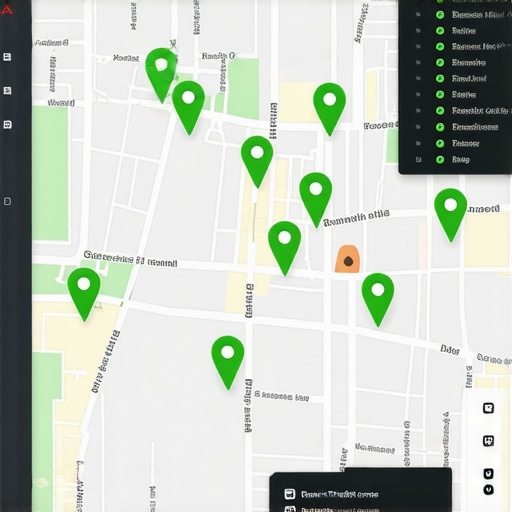
How can I maintain my local authority stack long-term?
The secret is freshness. Google loves to see that a business is still active in the community. I make it a point to revisit my citations once a quarter. If a new local resource page pops up, I am on it. If an old directory link breaks, I fix it using the 0$ way to force google to re-index your local citations. You should also be looking at authority stacking strategies to boost local seo in 2025 to ensure your schema and on-page signals are evolving with the algorithm. According to expert Joy Hawkins, the Proximity Filter is the hardest thing to overcome, and the only way through it is consistent, high-relevance signals that prove you are the best choice for that specific searcher.
Where Local Search Is Heading in 2026
Looking ahead, I predict that Entity Sentiment will become just as important as proximity. Google isn’t just going to look at where you are; it is going to look at how the neighborhood feels about you. Are you mentioned in local forums with positive sentiment? Do community blogs link to you with words of praise? This shift means your authority stack will need to include more social and community-driven nodes. My advice? Start small. Pick one neighborhood-level directory this week—one that your competitors have completely overlooked—and get your business listed. You will be surprised how much a single high-context link can do for your map pin.
Small Signals Often Carry the Heaviest Weight
One of the hardest lessons I learned is that Google cares more about how you fit into a community than how big your marketing budget is. I used to think I needed thousands of backlinks to win. Now, I know that just a few well-placed mentions on a neighborhood watch site or a local historical society page do the heavy lifting. This shift in perspective is what led me to authority stacking unveiled the hidden power for local seo. It isn’t about being the loudest; it’s about being the most relevant to the person searching from the corner store.
The Tools That Keep My Clients on Top
If you want to replicate these results, you need a specific toolkit. I rely on hyper-local grid trackers to see exactly which blocks I am losing to competitors. I also keep a curated list of proven backlink techniques to dominate local search nearby to ensure I am never just guessing. Don’t forget to look at local resource lists and alumni associations; these are the trust nodes that most franchises simply cannot touch. Using these specifically targeted tools allows you to master authority stacking for elevated local rankings without burning out on generic outreach.
#IMAGE_PLACE_HOLDER_FINAL#
Put Your Local Roots Down Today
Local SEO isn’t a race you win once; it’s a garden you tend to daily. By focusing on geographic relevance rather than just raw power, you create a business that is resilient to algorithm shifts. I want to see you take this authority stacking knowledge and apply it to one specific neighborhood this week. You have the map; now it is time to plant your flag. What is the weirdest local directory you’ve found that actually moved the needle for your rankings? Let me know in the comments below!