
The silence is what kills you. You check your Google Business Profile, see the views are technically up according to the dashboard, but the phone has not rung in three days. I have been there. I remember working with a local contractor who was doing everything by the book. We had the citations, the social profiles, the works. Yet, his phone was a paperweight. It was infuriating. I felt like I was shouting into a void while competitors with messy profiles sat comfortably in the 3-pack. That was my lightbulb moment: Google does not just want to see that your business exists; it needs to see that your business is an interconnected entity within your specific town. I realized I was just filling out forms instead of building real authority. In this guide, I am going to show you how to move past the generic noise and focus on the links that actually force an algorithm shift.
Stop Chasing Generic Links and Start Building Real Local Authority
The truth is, Google has evolved way past the era of just getting listed. If every business in your zip code has the same five citations from the same big-box directories, no one actually wins. I spent months early in my career chasing high DA links from tech blogs that had absolutely nothing to do with my local clients. It was a massive waste of energy and budget. I learned the hard way that why basic citation sources no longer push the needle for competitive map packs. Local SEO is no longer about volume; it is about proving to the algorithm that your business is a pillar of the community. You need links that scream your location and your service in the same breath. My biggest mistake was thinking a link from a national site was better than a link from the local high school booster club. I was wrong. The hyper-local link always wins in the map pack. According to the 2023 Whitespark Local Search Ranking Factors survey, the quality and authority of local-specific inbound links remain a top driver for proximity-based rankings.
Is the time investment for niche links truly worth it?
I get it. You are busy running a business, and the idea of hunting down neighborhood-specific links feels like another exhausting chore. You might wonder if you can just automate your way to the top. I tried that too. I thought learning how to automate reviews without looking like a spammer would be the silver bullet. While automation has its place, it cannot replace the manual work of securing the invisible neighborhood backlinks that actually push map pins higher. These are the connections that validate your entity. We are going to dive into a multi-cloud entity stack strategy for dominating local pins that creates a digital fortress around your brand. Have you ever felt like your map pin was literally frozen in place regardless of what you changed? Drop me a line if you have faced that frustration, because we are about to unfreeze it by targeting the signals Google actually trusts.
Build a Digital Net That Catches Every Local Searcher
You have to think of your online presence like a physical storefront in a tight-knit neighborhood. If you open a shop but nobody at the local diner knows who you are, you are essentially a ghost. In the digital landscape, Google’s algorithm functions like that local diner gossip—it needs to hear about you from sources it already trusts within your specific geography. This is why generic, global links are failing you. You need to focus on backlink optimization tips for local SEO authority that emphasize proximity over raw power. Imagine your business is the center of a web; every local link is a strand that makes that web stronger. If those strands are coming from a blog in another country, the web collapses. But if they come from the local library, a nearby non-profit, or a neighborhood news site, the web becomes unbreakable.
Why the High School Booster Club Is Your Secret SEO Weapon
I once worked with a plumber who was stuck in the ‘proximity graveyard.’ His office was three miles from the city center, and no matter what he did, he could not break into the downtown 3-pack. We stopped looking for high-DA industry links and started looking for 7 neighborhood backlink sources that move the needle for local plumbers. We sponsored a local little league team and got a link from their ‘Sponsors’ page. We reached out to a local history blog and offered a small tip about the city’s old pipe infrastructure. These were ‘weak’ links by traditional SEO standards, but they were location-rich. Within six weeks, his map pin did not just move; it leaped. This is the power of the invisible neighborhood backlinks that actually push map pins higher. Google saw that a trusted local entity was vouching for his physical presence in that specific town.
Layer Your Entity Signals Like a Structural Foundation
Once you have those local roots, you need to reinforce them using a technique called authority stacking. Think of this as building a digital skyscraper. You cannot just pile bricks and hope they stay up; you need a steel frame. In local SEO, that frame is the multi-cloud entity stack strategy for dominating local pins. You are essentially taking high-authority cloud properties—think Google Sites, Amazon S3, or Microsoft Azure—and using them to host content that mirrors your business data. When I first started experimenting with these stacks, I made the mistake of not linking the nodes in a circle; I just pointed everything at the homepage. That was an amateur move. Now, I link the Google Site to the S3 bucket, and the S3 bucket to the Azure node, all while embedding the Google Map. This creates a ‘proximity loop’ that tells Google your entity is everywhere in that city simultaneously. It is authority stacking the game changer in local SEO because it forces the algorithm to see your business as a validated, multi-dimensional entity rather than just a single website. This process isn’t about tricking the system; it is about providing so much consistent evidence of your location and service that the algorithm has no choice but to rank you higher than the guy who just has a Yelp profile and a prayer.Let’s get real for a second because most ‘experts’ are still teaching 2015 tactics. Everyone tells you that high Domain Authority (DA) is the holy grail. But here is the contrarian truth: for local rankings, high DA is often a vanity metric that hides a lack of relevance. I have seen a local bakery outrank a national franchise simply because the bakery had five links from local community gardens and neighborhood associations while the franchise had generic press releases. If the link doesn’t have a geographical ‘scent,’ Google’s proximity filters often just ignore it. I learned this when I tried to use backlink building blueprints for local seo success that were too broad. The algorithm is smarter than we give it credit for; it’s looking for ‘local nodes,’ not just raw power. Have you ever fallen into this trap? Let me know in the comments.
Don’t Kill Your Maps Listing with a $99 SEO Package
The most dangerous ‘oops’ factor in this game is the lure of cheap, automated citation blasts. I’ve watched business owners get their Google Business Profile suspended because they hired a ‘pro’ who used a bot to create 200 identical listings with slight variations. This is why why low cost local seo packages often damage your google maps presence. When you flood the web with low-quality, inconsistent data, you aren’t building authority; you are creating noise that forces Google to lose trust in your entity. If Google can’t verify your physical location because of conflicting ‘NAP’ (Name, Address, Phone) data from sketchy directories, your map pin stays buried. Instead of volume, focus on backlink optimization tips for local seo authority that prioritize the quality of the neighborhood connection over the quantity of the links.
Does Google actually track the ‘proximity loop’ in your entity stack?
Sophisticated searchers often ask if these complex loops actually matter or if it’s just digital voodoo. In my experience, the ‘proximity loop’—linking your cloud properties to each other and back to your map—is what bridges the gap for businesses located on the outskirts of a major city. According to Joy Hawkins, a leading voice at Sterling Sky, proximity is the heaviest ranking factor, but it is also the most volatile. By using authority stacking the game changer in local seo, you are essentially creating a ‘safety net’ of relevance that keeps your pin stable even when the algorithm shifts. You are telling Google: ‘Even if the user is 5 miles away, I am the most relevant authority for this service in this specific town.’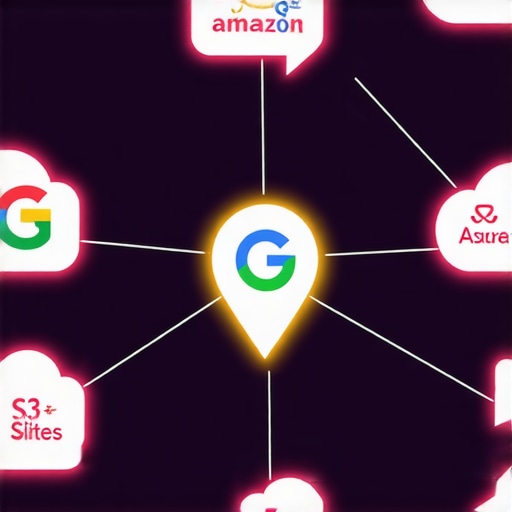
Avoid the Ghost Nodes That Waste Your Authority
The final mistake most people make when they try advanced stacking is creating ‘ghost nodes’—cloud pages that have no actual content or interlinking. If you just spin up an Amazon S3 bucket and leave it empty, it does nothing for you. You have to feed the stack with geo-relevant content. I always tell my clients to double-check their technical setup because there are 4 cloud node errors stopping your local rank gains that can render an entire strategy useless. When your nodes are properly synced, they act like a signal booster for your main site. It’s not just about building links; it’s about building a coherent digital narrative that proves your business is the heart of the local community. Stop worrying about the DA of a site in another country and start looking at the local impact of every digital move you make.The biggest lie in local SEO is that you can ‘set it and forget it.’ I have seen beautiful multi-cloud stacks go dormant because the owner did not realize a node went 404 or Google’s algorithm shifted its preference for specific schema types. To keep your ranking alive, you need a maintenance rhythm that is not just checking a dashboard once a month. I personally use a ‘grid-first’ approach to tracking. Most people look at a single ranking number, but you should stop relying on generic map trackers that miss local proximity shifts because they do not show you the ‘dead zones’ in the next neighborhood over. I use specific tools to visualize the proximity heat map, which is part of the 5-map seo-tools we use to spot competitor weakness faster. If I see a cluster of red dots moving into my territory, I know a competitor is pushing a new local node, and I need to counter-stack.
How do I maintain my authority stack over time?
Maintaining your stack is not about building more; it is about verifying the health of what you already have. Every quarter, I run a manual check on my cloud nodes. I look for broken links and ensure the NAP (Name, Address, Phone) data is still perfectly mirrored. If you have been hit by an update, you need to know how to audit your backlink profile before a major search update to prune any toxic associations. I also recommend using the audit tool hack that found our hidden map pin error—specifically looking at how your Google Map CID interacts with your stack nodes. If those connections break, the whole ‘authority loop’ collapses.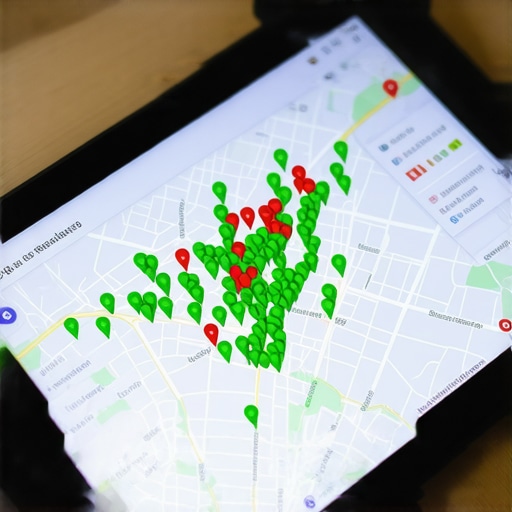
Keep Your Multi-Location Expansion Safe from Suspensions
When you decide to scale, the risk of a ‘suspension cascade’ is real. I once saw a franchise lose twelve listings overnight because they used the same footprint for their authority stacks across all locations. You must treat every location as a unique entity. This is why I advocate for the strategic move to scale local map rankings without triggering a suspension. You change the cloud providers, vary the content, and ensure the local nodes are hyper-specific to that branch. As Mike Blumenthal, a leading expert in local search, often notes, Google is increasingly focused on ‘real-world’ signals that prove a business actually operates in a physical space—if your digital footprint looks like a cookie-cutter template, you are asking for trouble.
The 2026 Shift Toward Semantic Entity Relevance
Looking ahead, the ‘proximity’ factor is going to get even more granular. We are moving away from simple keywords and toward ‘entity attributes.’ Google will not just look for ‘plumber in Dallas’; it will look for ‘licensed master plumber with 24-hour emergency response within 2 miles of the user.’ Your authority stack needs to start including these semantic layers now. Do not just link to your homepage; link to specific service pages that use the specific local schema tweak that validates your entity for google. This is the future of master authority stacking for elevated local rankings. Start by adding one new geo-relevant cloud node this week—maybe a Microsoft Azure page with an embedded map of a specific service area—and watch how it stabilizes your rank.
The Hardest Truths About Ranking in the Real World
After years of trial and error, I realized that local SEO is less about technical perfection and more about persistent proximity. One of my biggest lightbulb moments was realizing that Google doesn’t penalize you for having a small footprint; it ignores you for having a fragmented one. If your data doesn’t match across every cloud node and neighborhood link, the algorithm simply lacks the confidence to push you into that coveted top spot. I also learned that you should never wait for an algorithm update to fix things. You need to know how to audit your backlink profile before a major search update so you’re always playing offense, not defense. Finally, remember that authority isn’t bought; it is built through community signals that generic agencies often overlook because they are too busy selling automated citation blasts.
The Gear That Keeps My Clients in the Top 3
I do not believe in using a hundred tools when five will do. I lean heavily on Whitespark’s annual surveys to keep my strategies grounded in current data rather than SEO myths. For tracking, I avoid the pretty dashboards that hide the truth; I want the local seo report that actually makes sense to business owners, focusing on phone calls and direction requests rather than vanity impressions. I also keep a close eye on competitor movements using the 5-map seo-tools we use to spot competitor weakness faster. If you are just starting out, prioritize tools that show you a grid view of your rankings across different streets—that is where the real battle is won.
Take Control of Your Neighborhood’s Digital Map
The transition from a ‘paperweight’ phone to a ringing lead machine does not happen overnight, but it starts with a single high-value move. Whether you decide to sponsor a local charity or set up your first multi-cloud node, the goal is to stop being a digital ghost in your own town. You have the blueprint now to use authority stacking the game changer in local seo to fortify your business against bigger competitors. Don’t let the complexity paralyze you—every local link is a brick in your fortress. Before you hire anyone, make sure you know the 3 red flags to watch for when hiring a local seo expert so your investment actually moves the needle. Have you ever noticed your map pin ranking differently just a few blocks away from your office? Let me know your experience with local proximity in the comments below!