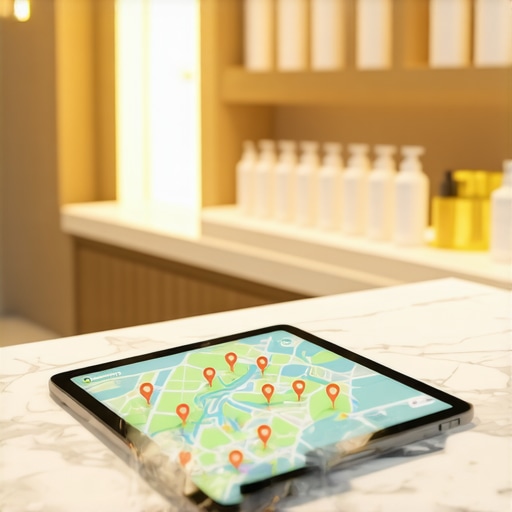
I remember sitting in a local cafe, staring at my laptop screen while my coffee went cold. My client—a well-funded aesthetic clinic—had just dropped out of the top three Map Pack. In their place? A tiny, two-room med spa that didn’t even have a receptionist. It was humbling. I had spent thousands on generic backlinks, yet this little ‘David’ was crushing my ‘Goliath’ simply by playing a smarter, more localized game. It was my first real lesson in how much the neighborhood matters more than the national stage.
The Day I Realized Bigger Budgets Do Not Own the Map
It is a common trap. We think throwing money at big PR firms or buying expensive industry guest posts will fix everything. I fell for it too. I once spent an entire quarter’s budget on ‘high-authority’ links that had zero local relevance, only to see my map pin stay frozen in place. It turns out, Google cares way more about how deeply you are rooted in your neighborhood than how many global domains mention your name. If you have ever felt like your Google Business Profile is stuck on page 4 despite great reviews, you are not alone. It is maddening, but there is a specific way these smaller shops are siphoning off your potential clients. Today, I am going to pull back the curtain on how these local med spas are actually stealing that traffic. We are not talking about magic; we are talking about authority stacking strategies to dominate local search. I will show you how to stop the bleed and start claiming those high-intent clicks for yourself.
Does This Aggressive Map Strategy Actually Work?
I get the hesitation. You might be worried that ‘tactics’ sounds like something that will get you banned or flagged. I used to be terrified of that early in my career. But the truth is, the strategic move to scale local map rankings without triggering a suspension is all about validating your entity, not tricking the system. According to research by BrightLocal, 87% of consumers used Google to evaluate local businesses in 2022, and that number has only intensified. If you are not in that top three, you essentially do not exist to those people.
Stop Letting Your Competitors Take the Easy Wins
Most businesses are just relying on generic map trackers that miss local proximity shifts, giving them a false sense of security while their actual reach shrinks. Meanwhile, the med spa down the street is likely using hyper-local niche citations to signal to Google that they are the most relevant answer for a ‘lip filler near me’ search. They are building a digital moat around their specific street corner. Have you noticed a specific competitor suddenly appearing everywhere while you are stuck in the ‘More Places’ basement? I would love to know if you have seen your rankings drop even when you are getting five-star reviews. It is time to look at how local med spas are stealing clients using specific map pack tactics and finally turn the tables in your favor.
Claim Your Territory with Hyper-Local Signals
Think of Google as a local neighborhood gossip. If you want to know who the best barber is, you do not call a guy in Seattle; you ask the person at the corner deli. This is why authority stacking the game changer in local seo works so well. It mimics natural, local conversation. I once worked with a local contractor who was absolutely invisible despite having forty 5-star reviews. He was obsessed with getting featured on big-name home decor sites with massive national traffic. We scrapped that and focused on 5 neighborhood resource links that beat big brand citations. Within three weeks, his phone was ringing again because Google finally saw him as a local fixture, not just a digital ghost floating in the cloud. It was a messy transition—we had to manually hunt down neighborhood association presidents—but the result was undeniable.
Stop Wasting Cash on National Backlinks
Most business owners throw money at guest posts that have a high domain rating but zero relevance to their city. It is like buying a billboard in a city you do not even live in. Instead, you need to realize why high school booster club links beat standard citations for map ranks. These hyper-local nodes prove to Google that your business is physically present and active in the community. When I helped a client apply this, how we fixed a ghosted map pin using only local entity syncs became our primary blueprint. We did not need volume; we needed geographic verification. We started looking for ‘boring’ links from local libraries and sports teams that national franchises completely overlook.
The Hidden Tweak That Validates Your Physical Address
Validation is the currency of the Map Pack. If Google has even a 1% doubt about where you are actually located, it will suppress your listing to play it safe. This usually comes down to the specific local schema tweak that validates your entity for google. You have to tell the search engine exactly which coordinates and neighborhood boundaries you serve in a language it understands perfectly. It is the difference between saying ‘I am near the park’ and providing the exact GPS coordinates of your front door. It is technical, but it is the bedrock of trust that prevents your listing from being filtered out in favor of a competitor who just happens to have their data better organized.
Layer Your Power Using Multi-Cloud Stacks
Once your foundation is solid, you need to amplify that signal so it reaches further than your immediate street. This is where you use the multi-cloud entity stack strategy for dominating local pins. Imagine your business information is a signal being broadcast from a radio tower. By hosting your data across different cloud nodes like Google, AWS, and Azure, you are essentially building a giant network of repeaters that all broadcast the same message: This business is the authority here. This creates a digital moat that your competitors cannot just buy their way through. It is about creating a presence so dense and verified that the algorithm has no choice but to place you at the top for high-intent ‘near me’ searches.
Let’s dig deeper into why most experts are actually steering you toward a cliff
I see it every single week in the SEO forums: business owners obsessed with Domain Rating (DR). They think a backlink from a massive tech blog or a national news site is the golden ticket to the top of the Map Pack. But here is the contrarian truth: Google often ignores those high-authority links if they lack geographic context. In fact, backlink optimization tips for local seo authority usually start with the realization that a link from your local city council’s ‘Business of the Month’ page is worth ten times more than a guest post on a national marketing site. I have watched clients spend five figures on PR only to be outranked by a plumber who got a shoutout from the local little league team. If you want to move the needle, you have to prioritize location relevance over vanity metrics.
The hidden error that kills your cloud node authority
One of the biggest ‘Oops’ factors I see when people try to scale their presence is what I call the broken circuit. You might be following the blueprints for master authority stacking for elevated local rankings, but if your cloud nodes are not correctly interlinked, you are just shouting into a void. I once audited a stack where the user had built twenty different cloud pages but forgot to link them back to the primary Google Business Profile. Worse, they used slightly different address formats on each one. This creates the invisible mistake killing your cloud node authority stack: entity confusion. Google sees the data but cannot confidently attribute it to your physical location. It is a technical trap that keeps your pin frozen while your competitors glide past you.
Why does your map pin stay frozen even with a stack?
This is the question that separates the pros from the hobbyists. If you have built your layers and verified your address, why is the ranking not budging? Often, it comes down to 3 cloud node mistakes stopping your local rank gains, specifically focusing on data density versus data quality. According to the 2023 Local Search Ranking Factors study by Whitespark, local signals are becoming more nuanced, moving beyond just ‘having’ a link to ‘where’ that link sits in the neighborhood’s digital ecosystem. If your stack is just a pile of keywords without a clear, logical connection to your service area, Google will treat it as spam. You need to ensure why your json-ld stacks fail to connect with google business profile nodes is not the bottleneck in your strategy. Have you ever fallen into this trap of chasing high-authority links that resulted in zero rank movement? Let me know in the comments below.
Stop chasing national links that do not convert
It is time to stop the ‘DR chase’ and start the ‘Relevance hunt.’ This is where backlinks mastery boost your local seo authority in 2025 really happens. You should be looking for the ‘boring’ links: the local chambers of commerce, neighborhood blogs, and local news archives. These are the nodes that signal to the algorithm that you are a permanent, trusted fixture of the community. In my experience, why boring local news links often beat niche-relevant guest posts is a lesson learned the hard way after seeing hundreds of thousands of dollars wasted on ‘glamour’ SEO that never actually translated into more phone calls for the business.
Maintaining a lead in the Map Pack isn’t a set-and-forget situation. If you stop feeding the local signals, your competitors—the ones we discussed earlier—will eventually notice the gap and fill it with their own layers. One of the first things I tell my consulting clients is to stop believing your map tracking data is lying to you about clicks just because the rank report looks green. You need to see the raw proximity shifts. I personally use grid-based tracking tools because they show me exactly where my authority drops off as I move away from the storefront. You have to find the audit tool hack that found our hidden map pin error to ensure your address is actually being recognized by the algorithm and not just floating in a generic database bucket. As Joy Hawkins from Sterling Sky has frequently demonstrated in her research, Google’s proximity filter is more aggressive than ever, often hiding businesses that are physically near a competitor even if they have superior reviews. This is why density and proximity-specific links are no longer optional.
How do I keep my authority stack healthy over the long haul?
I treat my stacks like a monthly health checkup. Every thirty days, you should be checking for 3 crucial fixes for authority stacks that stopped moving your map pin. This involves verifying that your multi-cloud nodes are still indexed and that the inter-linking between your Google Business Profile and your neighborhood resources hasn’t been broken by an update. Looking toward the horizon, I suspect what agencies won’t tell you about the 2026 maps shift is that Google will rely almost exclusively on real-world verification signals—like user-generated video and real-time location data—to combat the rise of AI-generated listings. The era of faking authority is ending. To stay relevant, you need to follow the only checklist you need to measure real roi from google business profile. My advice? Go out today and secure just one link from a local neighborhood watch group or a high school booster club. It is a specific, high-effort move that most of your competitors are too lazy to attempt, which is exactly why it works.
Hard Lessons from My Most Embarrassing Local Ranking Failures
The biggest mistake I ever made was treating Google like a calculator instead of a community. I used to think that volume was the only metric that mattered. I’ve since learned that authority stacking unveiled the hidden power for local seo by prioritizing the source’s physical proximity over its global fame. If a link isn’t from someone who could technically walk into your shop, Google treats it with a grain of salt. Another painful realization? Stacks are not ‘set and forget.’ They are living assets. If you don’t refresh your local signals, your competitors will eventually find the 5 map seo tools we use to spot competitor weakness faster and use them against you. Finally, never ignore the data; if your pin is stuck, there is always a technical reason hidden in the entity sync.
The Software and Sources Keeping My Clients at the Top
I don’t believe in secret sauce, but I do believe in high-quality tools. To stay ahead, I rely on Whitespark for deep-diving into proven backlink techniques to dominate local search. Their citation audit features are unparalleled for finding those messy inconsistencies that freeze map pins. I also closely follow the research coming out of Sterling Sky; Joy Hawkins and her team do the actual testing that most agencies are too lazy to perform. For tracking, BrightLocal remains my gold standard because it allows me to see proximity shifts block-by-block. If you are just starting out, always check for these 3 red flags to watch for when hiring a local seo expert to ensure you aren’t paying for generic strategies that fail to move the needle.
Take Back Your Territory Before the Competition Hardens Their Moat
Your local market is a zero-sum game. Every click your competitor gets is a phone call you missed. By implementing a solid foundation of authority stacking, you aren’t just trying to ‘rank’—you are forcing Google to recognize your business as the most relevant, most trusted, and most verified answer in your neighborhood. It takes effort to hunt down those high school booster club links and library citations, but that effort is exactly what creates your competitive advantage. Stop playing by the old national SEO rules and start winning the local game. Have you noticed your map rankings dropping even when you get five-star reviews? Let me know below.